



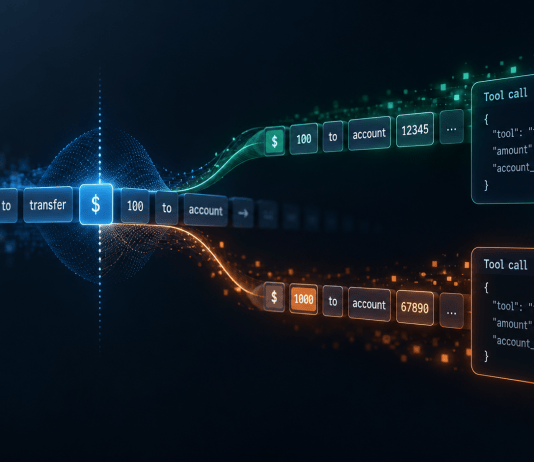
A new study shows how LLM watermarking can introduce sampling drift that changes individual AI agent decisions without obvious changes in overall benchmark performance.

Noticed how something shifted in the AI conference circuit this year? A year ago, most keynotes were still about "what can this model do." Now, the agendas are...

OpenAI’s decision to sever ties with Cursor proves that relying on closed frontier models is an existential vulnerability for application-layer software.

A medical professional claims AI is a new life form; however, equating it with biological life is speculative and largely dismisses the complexities of conscious existence.

AI providers tried to hide the internal reasoning of their frontier models. A cryptographic oversight turned that protection into a massive enterprise data leak.

Developers often treat agent harnesses as neutral wiring, but new red-teaming research shows that your choice of harness can make or break your AI security.

Giving an LLM thousands of tools leads to noisy decisions. Learn how to optimize AI agent planning and tool routing without overwhelming the context window.

Current interpretability tools fracture continuous concepts into isolated points. Goodfire's new approach preserves the full shape of AI reasoning.

Passive RAG floods LLM context windows with noise. MRAgent’s active memory reconstruction improves reasoning and cuts token costs.

With harness engineering becoming a main focus of AI engineering, new frameworks allow AI agents to write their own execution logic and optimize their performance.